
There is a certain look you recognize immediately if you’ve spent enough time around veterans, cops, firefighters, medics, ranchers, linemen, or men who’ve carried responsibility longer than they carried comfort.
It’s not loud.
It’s not performative.
It’s the look of somebody who understands that life is heavy and decided to carry it anyway.
That weight shows up in different uniforms. Sometimes it’s body armor and a patrol rifle. Sometimes it’s bunker gear soaked in smoke and sweat. Sometimes it’s desert camouflage under a foreign sky. Sometimes it’s jeans, work boots, and dirt packed beneath fingernails from rebuilding a piece of land by hand.
But underneath all of it is the same truth:
Real men understand that accountability is not punishment.
It’s purpose.
That truth sits at the center of everything Army veteran Lenny Watson is building.
Not because he says it in polished motivational language. Not because he wraps it in trendy self-help branding. Quite the opposite. Watson speaks the way a lot of old-school operators, veterans, and hard men speak when they finally stop caring about sounding perfect.
Direct.
Raw.
Honest.
Sometimes rough around the edges.
But real.
And in a world drowning in curated personas and algorithm-fed weakness, real stands out.

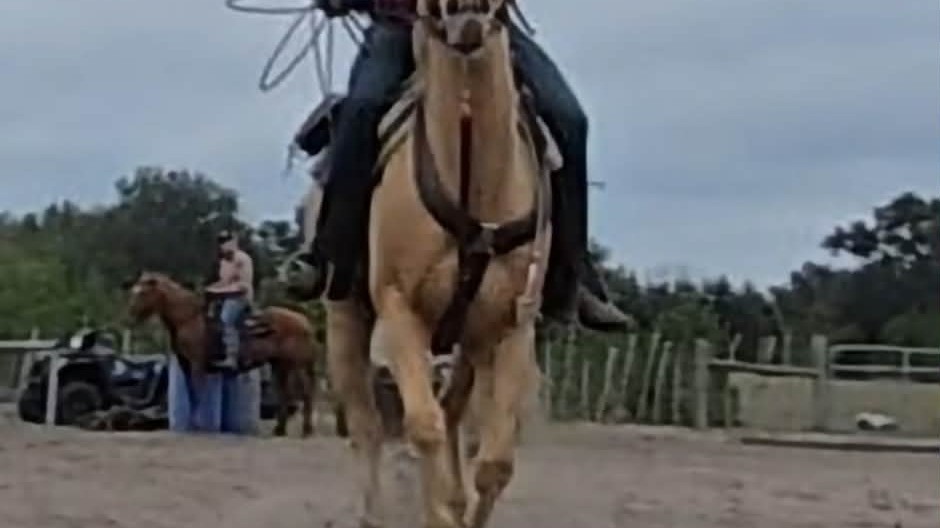
Watson’s project, Wrangler Ranger Camp, is aimed at boys between eight and twelve years old. But calling it simply a “camp” undersells what he is actually trying to build.
Wrangler Ranger Camp is rooted in old-school mentorship and practical living. Boys learn horsemanship, communication, responsibility, teamwork, outdoor skills, structure, and discipline through direct experience instead of passive instruction. They are taught to engage with the world physically and honestly instead of hiding behind devices and distraction.
Watson wants boys to reconnect with things many modern kids rarely experience anymore — working with their hands, caring for animals, being outdoors, learning practical responsibility, speaking face-to-face, and understanding what it means to contribute to a group instead of constantly consuming for themselves.
“I think it starts with basic communication,” he said. “These kids… when presented with the problem, they shut down.”
There is intentionality behind every part of it.
The horses matter because horses demand calmness, awareness, patience, and control.
The outdoor environment matters because discomfort teaches resilience faster than lectures ever will.
The structure matters because structure builds confidence.
And the mentorship matters because boys desperately need examples of grounded men who are willing to teach instead of simply criticize.
Watson is not approaching this as a polished corporate youth program. In many ways, Wrangler Ranger Camp feels more like a throwback to an older America — one where boys learned directly from men through work, responsibility, and shared experience.
He wants to create a place where kids can disconnect from the constant noise of modern culture and reconnect with reality. Real work. Real conversations. Real consequences. Real accountability.
But underneath that mission is something much deeper.
This is not really about campfires, cowboy culture, or outdoor activities.
This is about intervention.
It is about reaching boys before the world convinces them that masculinity is dangerous, responsibility is optional, and comfort is the highest form of living.
It is about creating men who can carry weight.
Because somebody has to.
And right now, fewer people are willing.
Watson kept circling back to one idea over and over again without even trying to frame it as a slogan.
“It's just I wanted to leave my imprint,” he said. “Like, I really believe in legacy.”
Legacy.
Not legacy in the social media sense.
Not followers.
Not clout.
Not attention.
Legacy in the oldest sense of the word.
What do you leave behind when you’re gone?
What parts of yourself continue living in other people?
What kind of men exist because you took the time to teach them something?

That question matters deeply to the Trigger Discipline audience because law enforcement officers, veterans, first responders, and working men understand something the rest of society often forgets:
Nothing survives without standards.
Not families.
Not communities.
Not departments.
Not nations.
Not brotherhoods.
Everything stable in civilization exists because somewhere, at some point, somebody was willing to maintain standards when it would have been easier not to.
That is the burden carried by every patrol officer working night shift while the rest of the city sleeps.
It is carried by the firefighter forcing himself through another doorway while his lungs cook inside turnout gear.
It is carried by the combat veteran who came home from war and still wakes up scanning exits in restaurants.
It is carried by fathers who continue showing up exhausted because the mortgage still needs paid and their children are watching.
And that burden becomes dangerous when there is nobody left to pass it on.
Watson understands that.
Partly because he has lived enough life to recognize the consequences of drift.
Watson spoke openly about rebuilding himself, changing his lifestyle, retreating into the woods, and reconstructing both his environment and his priorities.
“When I started to make those real deep personal changes,” he said, “I kind of just Hail Mary’d it and came out to the woods so to say and just really started recreating this space.”
There was no fake bravado in the way he described it. No attempt to paint himself as flawless.
In fact, he openly admitted the opposite.
That honesty matters.
Because the strongest mentors are rarely men who never failed.
They are men who failed, took accountability, and rebuilt anyway.
That distinction matters more than most people realize.
Young boys do not need perfect men.
They need honest ones.
They need examples of what responsibility looks like after mistakes.
They need to see that integrity is not about pretending to be spotless.
Integrity is about alignment.
Owning what is yours.
Correcting what is broken.
Standing back up when collapse would be easier.
That is the kind of lesson you cannot teach through an iPad.
You cannot download discipline.
You cannot stream resilience.
You cannot outsource masculinity to social media influencers.
One of Watson’s strongest observations centered around how modern culture has outsourced accountability.
“We lend it to technology,” he said. “We stopped being accountable because we can just leave it to the power grid.”

People no longer know how to do things themselves. Communication is disappearing. Younger generations increasingly struggle to engage in direct human interaction because they’ve grown up staring down into screens instead of looking people in the eye.
Every veteran, cop, or first responder reading this already knows exactly what he means.
You see it everywhere.
People panic under minor pressure.
People fold under discomfort.
People avoid hard conversations.
People search for excuses before solutions.
And maybe worst of all — people increasingly want all the rewards of strong communities without accepting any responsibilities required to maintain them.
That is not sustainable.
Strong societies require capable men.
Not abusive men.
Not arrogant men.
Capable men.
Men who can control themselves.
Men who can communicate.
Men who can regulate emotion without becoming emotionally dead.
Men who can carry responsibility without collapsing into self-pity.
Men who understand service.
That is why the age range Watson focuses on matters so much.
Eight to twelve years old.
Right before the world fully gets its hooks into them.
Right before endless digital stimulation replaces curiosity.
Right before insecurity hardens into identity.
Right before online culture teaches them that masculinity is either toxic or theatrical.
Watson believes that window matters because it is still early enough to shape direction.
And direction matters more than motivation ever will.
A boy who learns discipline early has a radically different life trajectory than one who never does.
That reality is painfully obvious to anybody working in law enforcement.
Cops see the downstream consequences of fatherlessness, lack of structure, lack of accountability, and absent mentorship every single day.
First responders see the human wreckage that forms when people spend years avoiding responsibility.
Veterans see it too.
Especially veterans who return home and realize civilian life often lacks the structure, standards, and brotherhood that once gave them direction.
Watson also drew a parallel between young boys and veterans.
He talked about how veterans often do not necessarily need another sterile clinical environment.
Sometimes they simply need a place to commune.
A place to exchange information.
A place to talk honestly.
A place where somebody else understands the weight.
That observation cuts deeper than most civilians realize.
Brotherhood has always been one of the great stabilizers of hard professions.
Good cops survive because other cops teach them.
Good firefighters survive because senior firefighters pass down lessons written in blood.
Good soldiers survive because experienced men teach younger men how to avoid getting killed.
The transfer of wisdom is survival.
But modern culture increasingly isolates people.
Everybody is connected digitally while becoming disconnected personally.
Watson is pushing against that current.
Not online from a distance.
Not through empty motivational slogans.
Through physical spaces, direct mentorship, and lived experience.

He is creating an environment where boys are expected to engage with the world instead of passively scrolling through it.
Not with theory.
With application.
That distinction matters.
One thing that stood out immediately was how much Watson values practical experience because that philosophy now shapes his entire life.
He talked about retreating from the noise, rebuilding himself, and creating a lifestyle centered around land, horses, nature, and intentional living. Instead of chasing status or convenience, he has deliberately leaned into a life that requires presence and responsibility.
That worldview directly feeds into Wrangler Ranger Camp.
The camp is not designed around keeping kids entertained.
It is designed around making them capable.
Watson wants boys learning through movement, responsibility, challenge, and direct participation. Horsemanship. Farming. Working with hands. Building. Applying information instead of endlessly discussing it.
That mindset resonates deeply with the Trigger Discipline audience because operational people understand that competence is earned physically.
You can study tactics forever.
Eventually you still have to clear the room.
You can watch videos about firefighting.
Eventually you still have to pull the hose.
You can read about leadership.
Eventually you still have to stand in front of people when things go wrong.
Application reveals character.
And that is exactly what young boys are starving for.
Challenge.
Responsibility.
Competence.
Real-world friction.
Not endless entertainment.
Not another dopamine drip.
Not another screen.
What Watson is building through Wrangler Ranger Camp feels less like recreation and more like cultural resistance.
Because at its core, the camp appears to be fighting for something many people are afraid to say out loud anymore:
Boys need guidance from grounded men.
That sentence should not be controversial.
But modern culture has made basic truths feel rebellious.
The irony is that the communities most aware of this problem are often the same communities carrying the consequences.
Police officers respond to homes shattered by absent fathers.
EMTs treat overdoses born from hopelessness.
Veterans watch young men drift without purpose.
Teachers fight uphill battles against attention spans destroyed by constant digital consumption.
Everybody sees the symptoms.
Few people are building solutions.
Watson is trying.

And whether Wrangler Ranger Camp grows into a regional movement or remains a local effort almost becomes secondary to the larger point.
The point is that somebody decided to step forward instead of complain.
That alone deserves respect.
Because accountability starts there.
Not with blame.
With ownership.
One of the strongest themes throughout Watson’s perspective is the belief that fulfillment comes from contributing to something larger than yourself.
“Most of the things that have graced me, blessed me, came from men who put legacy at their forefront,” he said. “They thought ahead of themselves. They thought about people coming after them.”
Every operator understands that feeling.
It is the strange paradox of service.
The jobs that demand the most from you often become the ones you miss the most.
Not because the conditions were easy.
But because purpose existed.
There is something profoundly human about contributing to a mission larger than your own comfort.
Military units understand it.
SWAT teams understand it.
Engine companies understand it.
Good patrol shifts understand it.
You stop thinking entirely in terms of “me” and begin thinking in terms of “us.”
That shift changes people.
It builds resilience.
It builds identity.
It builds belonging.
And perhaps most importantly, it builds accountability because your actions now affect everybody around you.
That is exactly what young boys need to experience before adulthood.
They need to understand that manhood is not self-centered.
Real masculinity is deeply sacrificial.
It protects.
It provides.
It serves.
It teaches.
It absorbs hardship without transferring it onto everybody else.
That does not mean men never struggle.
It means they continue carrying responsibility while struggling.
That distinction separates disciplined men from self-indulgent ones.
Watson also spoke repeatedly about communication.
Simple communication.
Face-to-face conversation.
Human interaction.
That may sound basic, but anybody paying attention knows how severe this problem has become.
We now have generations growing up more comfortable performing online than speaking honestly in person.
Conflict avoidance has replaced conflict resolution.
Validation has replaced truth.
Performance has replaced substance.
And yet in every serious profession — law enforcement, military, emergency services, blue-collar trades — communication remains survival.
Bad communication gets people hurt.
Good communication builds trust.
Trust builds teams.
Teams survive adversity.
That is why environments like Wrangler Ranger Camp matter.
Because boys need places where they can learn how to speak, listen, work, fail, adapt, and contribute without hiding behind screens.
They need environments where standards exist.
Where excuses do not.
Where character matters.
Where integrity means doing the right thing when nobody is watching.
The Trigger Discipline audience understands this intuitively because integrity has always been the dividing line between professionals and liabilities.
Integrity is what determines whether another officer trusts you entering a door.
Integrity determines whether a firefighter trusts you on the nozzle behind him.
Integrity determines whether a squad trusts you overseas.
Integrity is not motivational poster language.
It is operational currency.
Without it, everything breaks.
And perhaps that is why Watson’s vision resonates.
Because beneath the horses, the land, the camp, and the cowboy imagery is something far more serious.
He is trying to create men who can be trusted.
Men who can carry responsibility.
Men who understand accountability before the world teaches them avoidance.
Men who know how to work.
Men who know how to communicate.
Men who understand that masculinity is not domination.
It is stewardship.
That lesson matters now more than ever.
Because we are living through a cultural moment where many boys are growing up surrounded by noise but starving for direction.
They have endless content.
Very little guidance.
Endless stimulation.
Very little discipline.
Endless opinions.
Very little wisdom.
And eventually somebody has to interrupt that cycle.
Somebody has to look a young man in the eye and say:
You are capable of more.
Stand up straight.
Tell the truth.
Carry your weight.
Learn the skill.
Do the hard thing.
Protect people weaker than you.
Control yourself.
Become useful.
That message used to be common.
Now it feels rare.
Which is exactly why it matters.
Watson described his YouTube channel as almost a “legacy trail” — a place where pieces of experience, lessons, failures, growth, and perspective could live beyond him.
“As I was cultivating my property,” he said, “it was kind of just part of my personal testimony… almost like a legacy trail.”
That phrase stayed with me.
Because ultimately, every man leaves a trail.
The only question is what kind.
Some leave destruction.
Some leave excuses.
Some leave bitterness.
Some leave nothing at all.
But the best men leave guidance.
Standards.
Examples.
Skills.
Stories.
Protection.
Strength.
And other people standing taller because they existed.
That is legacy.
Not fame.
Not attention.
Impact.
The men reading this already understand that instinctively.
Every veteran teaching a younger guy how to navigate life after service.
Every field training officer mentoring a rookie.
Every firefighter teaching probies the job.
Every father teaching his son how to shake hands, speak clearly, and take responsibility.
That is legacy in motion.
And maybe that is the deeper reason projects like Wrangler Ranger Camp resonate so strongly.
Because underneath all the discussion about masculinity, accountability, and integrity is one brutal truth:
Civilization is always one generation away from forgetting what built it.
The weight still has to be carried.
The standards still have to be maintained.
The lessons still have to be passed down.
And somewhere out in the woods, a man named Lenny Watson is trying to make sure at least a few more boys grow up ready to carry their share.
Just like the men before them did.
That is how legacies survive.
One conversation.
One lesson.
One standard.
One boy at a time.
And in a culture increasingly addicted to comfort, that kind of work still matters because real men — the kind who carry the weight anyway — always will.